Emergency Food & Water
How to Build an Emergency Food Supply
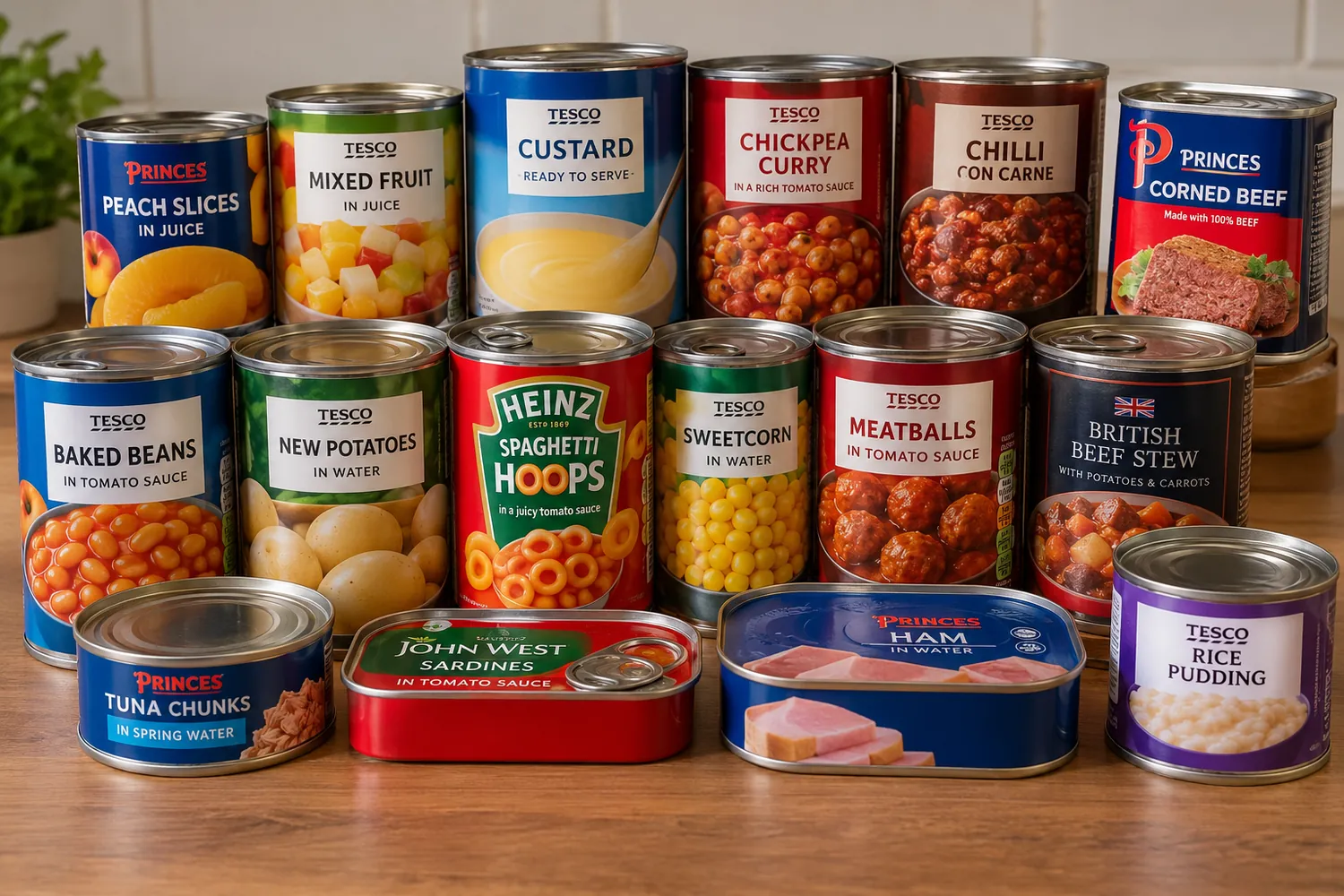
If your electricity went off for several days, would you have enough food at home to feed everyone?
You don't need expensive survival rations or specialist emergency meals. Ordinary supermarket tins and a few long-life packets can provide a practical emergency food supply.
I recommend starting with three days of food that can be stored without refrigeration and, where the product instructions allow, eaten without cooking.
The difficulty is knowing exactly how much to buy, especially when you're feeding a family.
That's why I've created the calculator below. Enter the number of people in your household and it will produce a personalised shopping list and three-day meal plan.
The calculator also estimates the calories provided, helping you check whether you've stored enough food.
Your 3-Day Emergency Food Calculator
Select the people in your household to find out exactly which foods to buy, how many tins and packets you need, and what everyone can eat over three days.
Calorie targets are simplified planning estimates (adult man 2,500, adult woman 2,000, children 1,300–2,500 kcal a day by age), not exact individual nutritional requirements. Actual needs vary with age, sex, activity, health and other factors. This calculator is not suitable for infants under 2.
Household members
4
Calories required for 3 days
24,000 kcal
Calories provided by the meal plan
24,406 kcal
Difference
+406 kcal
✓ The meal plan meets the approximate calorie target for your household. Calorie targets are approximate and don't guarantee complete nutrition.
Your Emergency Food Shopping List
Tick items off as you buy them. Quantities are rounded up to whole tins, packets, jars and bars.
Total to buy: 70 items, including 36 tins.
Spare food is not counted towards the calories in the meal plan. Tins and rice pouches are shared at each meal so they are used up where possible; crackers, peanut butter, chocolate and cereal bars keep once opened. Items marked "may need heating" should only be eaten cold if the label allows it.
Your 3-Day Meal Plan
Portions are per person. Calories are approximate and based only on the food allocated, not on spare food. Open "View portions and calories" under each day for the full breakdown.
Day 1
- Breakfast:
- Cream crackers with peanut butter and tinned peaches.
- Lunch:
- Baked beans with tinned potatoes.
- Dinner:
- Tinned meatballs in tomato sauce with ready-to-eat rice.
- Dessert:
- Tinned rice pudding.
- Snacks:
- Chocolate and a cereal bar.
- Each 1 × adult man: 2,526 kcal (target 2,500) ✓
- Each 1 × adult woman: 2,025 kcal (target 2,000) ✓
- Each 2 × child (6–10 years): 1,750 kcal (target 1,750) ✓
View portions and calories
Each person: 1 × adult man
- Breakfast (697 kcal): Cream crackers 70g, Peanut butter 40g, Tinned peaches 231g
- Lunch (346 kcal): Baked beans 241g, Tinned potatoes 197g
- Dinner (464 kcal): Tinned meatballs in tomato sauce 231g, Ready-to-eat rice 146g
- Dessert (187 kcal): Tinned rice pudding 231g
- Snacks (832 kcal): Milk chocolate 30g, Cereal bars 2 × cereal bar, Cream crackers 95g
Day total: 2,526 kcal (target 2,500 kcal)
Each person: 1 × adult woman
- Breakfast (606 kcal): Cream crackers 60g, Peanut butter 35g, Tinned peaches 206g
- Lunch (310 kcal): Baked beans 216g, Tinned potatoes 177g
- Dinner (416 kcal): Tinned meatballs in tomato sauce 206g, Ready-to-eat rice 131g
- Dessert (167 kcal): Tinned rice pudding 206g
- Snacks (526 kcal): Milk chocolate 25g, Cereal bars 1 × cereal bar, Cream crackers 60g
Day total: 2,025 kcal (target 2,000 kcal)
Each person: 2 × child (6–10 years)
- Breakfast (539 kcal): Cream crackers 55g, Peanut butter 30g, Tinned peaches 181g
- Lunch (274 kcal): Baked beans 191g, Tinned potatoes 157g
- Dinner (359 kcal): Tinned meatballs in tomato sauce 181g, Ready-to-eat rice 111g
- Dessert (147 kcal): Tinned rice pudding 181g
- Snacks (431 kcal): Milk chocolate 20g, Cereal bars 1 × cereal bar, Cream crackers 45g
Day total: 1,750 kcal (target 1,750 kcal)
Day 2
- Breakfast:
- Cream crackers with peanut butter and a cereal bar.
- Lunch:
- Spaghetti hoops with tinned potatoes.
- Dinner:
- Tuna, sweetcorn and ready-to-eat rice salad.
- Dessert:
- Tinned fruit with ready-to-eat custard.
- Snacks:
- Chocolate and extra crackers.
- Each 1 × adult man: 2,577 kcal (target 2,500) ✓
- Each 1 × adult woman: 2,026 kcal (target 2,000) ✓
- Each 2 × child (6–10 years): 1,787 kcal (target 1,750) ✓
View portions and calories
Each person: 1 × adult man
- Breakfast (690 kcal): Cream crackers 70g, Peanut butter 40g, Cereal bars 1 × cereal bar
- Lunch (251 kcal): Spaghetti hoops 232g, Tinned potatoes 196g
- Dinner (441 kcal): Tuna in spring water 126g, Tinned sweetcorn 115g, Ready-to-eat rice 143g
- Dessert (363 kcal): Tinned mixed fruit 227g, Ready-to-eat custard 227g
- Snacks (832 kcal): Milk chocolate 30g, Cream crackers 95g, Cereal bars 2 × cereal bar
Day total: 2,577 kcal (target 2,500 kcal)
Each person: 1 × adult woman
- Breakfast (636 kcal): Cream crackers 65g, Peanut butter 35g, Cereal bars 1 × cereal bar
- Lunch (231 kcal): Spaghetti hoops 212g, Tinned potatoes 181g
- Dinner (399 kcal): Tuna in spring water 116g, Tinned sweetcorn 105g, Ready-to-eat rice 128g
- Dessert (331 kcal): Tinned mixed fruit 207g, Ready-to-eat custard 207g
- Snacks (429 kcal): Milk chocolate 25g, Cream crackers 65g
Day total: 2,026 kcal (target 2,000 kcal)
Each person: 2 × child (6–10 years)
- Breakfast (559 kcal): Cream crackers 55g, Peanut butter 30g, Cereal bars 1 × cereal bar
- Lunch (202 kcal): Spaghetti hoops 187g, Tinned potatoes 156g
- Dinner (351 kcal): Tuna in spring water 102g, Tinned sweetcorn 90g, Ready-to-eat rice 113g
- Dessert (291 kcal): Tinned mixed fruit 182g, Ready-to-eat custard 182g
- Snacks (384 kcal): Milk chocolate 25g, Cream crackers 55g
Day total: 1,787 kcal (target 1,750 kcal)
Day 3
- Breakfast:
- Cream crackers with peanut butter and tinned fruit.
- Lunch:
- Baked beans with tinned potatoes and tinned ham.
- Dinner:
- Tinned beef stew with ready-to-eat rice.
- Dessert:
- Tinned rice pudding.
- Snacks:
- Chocolate and a cereal bar.
- Each 1 × adult man: 2,573 kcal (target 2,500) ✓
- Each 1 × adult woman: 2,055 kcal (target 2,000) ✓
- Each 2 × child (6–10 years): 1,775 kcal (target 1,750) ✓
View portions and calories
Each person: 1 × adult man
- Breakfast (711 kcal): Cream crackers 70g, Peanut butter 40g, Tinned mixed fruit 235g
- Lunch (597 kcal): Baked beans 250g, Tinned potatoes 205g, Tinned ham 119g
- Dinner (424 kcal): Tinned beef stew 235g, Ready-to-eat rice 147g
- Dessert (190 kcal): Tinned rice pudding 235g
- Snacks (651 kcal): Milk chocolate 30g, Cereal bars 2 × cereal bar, Cream crackers 55g
Day total: 2,573 kcal (target 2,500 kcal)
Each person: 1 × adult woman
- Breakfast (616 kcal): Cream crackers 60g, Peanut butter 35g, Tinned mixed fruit 205g
- Lunch (515 kcal): Baked beans 213g, Tinned potatoes 179g, Tinned ham 103g
- Dinner (368 kcal): Tinned beef stew 205g, Ready-to-eat rice 127g
- Dessert (166 kcal): Tinned rice pudding 205g
- Snacks (390 kcal): Milk chocolate 25g, Cereal bars 1 × cereal bar, Cream crackers 30g
Day total: 2,055 kcal (target 2,000 kcal)
Each person: 2 × child (6–10 years)
- Breakfast (523 kcal): Cream crackers 50g, Peanut butter 30g, Tinned mixed fruit 179g
- Lunch (444 kcal): Baked beans 187g, Tinned potatoes 152g, Tinned ham 88g
- Dinner (322 kcal): Tinned beef stew 179g, Ready-to-eat rice 112g
- Dessert (145 kcal): Tinned rice pudding 179g
- Snacks (341 kcal): Milk chocolate 20g, Cereal bars 1 × cereal bar, Cream crackers 25g
Day total: 1,775 kcal (target 1,750 kcal)
Why I recommend ordinary supermarket food
You don't need specialist survival food to prepare for a short emergency.
Many ordinary tinned foods have long shelf lives, are easy to store and can be eaten without cooking if the product instructions allow it.
I've concentrated on familiar foods such as baked beans, potatoes, meatballs, tuna, rice pudding and tinned fruit.
The aim is to create meals that people will actually want to eat, rather than simply collecting tins for the sake of it.
Can you eat emergency food cold?
A power cut might leave you without an electric cooker or microwave.
That's why it's sensible to choose foods that can be eaten cold.
Always check the instructions on the packaging, particularly for prepared meat dishes and ready-to-eat rice.
If you have a suitable camping stove, many of these meals can be warmed up. Never use outdoor camping stoves, charcoal burners or barbecues inside your home because of the risk of carbon monoxide poisoning.
How to store your emergency food
Keep unopened tins and packets in a cool, dry place.
Check their best-before dates periodically and rotate supplies by eating older products and replacing them.
Keep a manual tin opener with your emergency food.
Where possible, choose pack sizes that can be eaten in one sitting. Without refrigeration, do not assume that opened leftovers can safely be stored for later.
What about allergies and special diets?
This example meal plan includes foods containing peanuts, fish, dairy, gluten and meat.
If anyone in your household has allergies, dietary restrictions or additional nutritional requirements, adapt the plan accordingly.
The calorie calculator provides estimates, not individual dietary advice.
Don't forget drinking water
Food is only one part of preparing for an emergency.
I recommend keeping at least three litres of drinking water per person per day as a practical starting point.
Use my emergency water calculator to work out how much drinking water your household needs.
My recommendation
Start with three days of familiar supermarket foods that everyone in your household will eat.
You don't have to buy everything at once. Adding a few extra tins or packets to your normal shopping each week is a straightforward way to build your emergency food supply.
Once you've built your initial supply, you can gradually increase it if you have the space and budget.
The aim isn't to prepare for every imaginable disaster. It's simply to make sure that, if something unexpected happens, feeding your household is one less thing to worry about.
You might also find these guides useful
Essential Guides
How Much Water Do You Need in Your Emergency Kit?
According to UK government advice you should have 2.5-3 litres of drinking water per person per day in your emergency supplies.
Read the guidePractical Guides
Should You Store Pasta and Rice in Your Emergency Food Supply?
Dried pasta and rice are cheap and filling, but they need fuel and water to cook. Here are the pros, the problems and some practical alternatives.
Read the guide