Essential Guides
UK Government Be Ready Campaign: What You Need for 3 Days
The UK Government launched its Be Ready campaign in October 2026, encouraging households to take simple steps to prepare for emergencies.
The advice focuses on being able to manage for at least three days if essential services are disrupted by events such as severe weather, power cuts or water shortages.
The good news is that preparing doesn't have to be complicated or expensive. You may already have many of the essentials at home.
What is the Be Ready campaign?
Be Ready is a UK Government campaign designed to help ordinary households prepare for emergencies.
It encourages people to keep essential supplies at home, understand what to do if services are interrupted and make a basic household emergency plan.
The advice isn't about preparing for extreme survival situations. It's about making sure you and your family can manage a temporary disruption to normal life.
What should you keep at home?
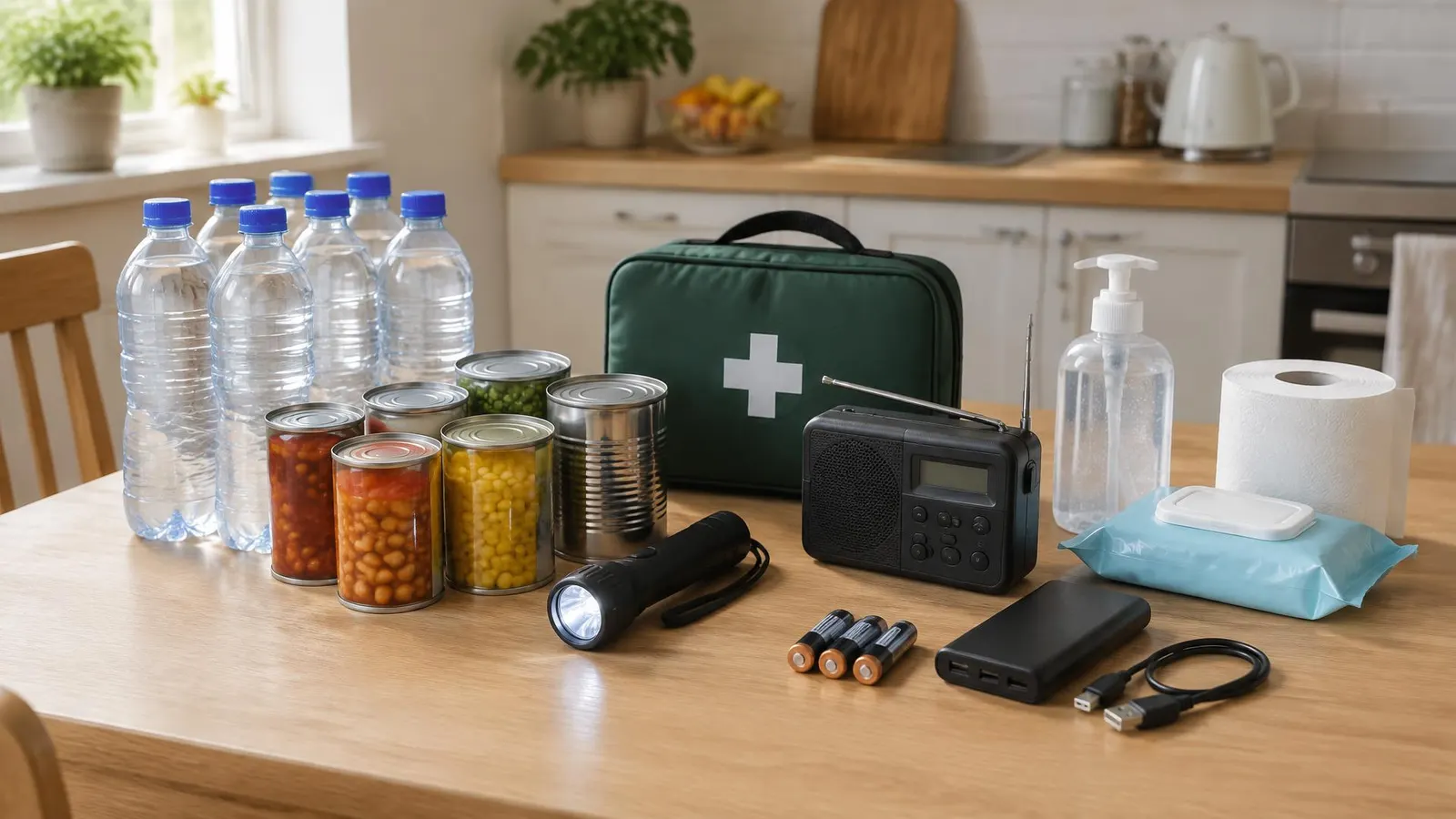
For a three-day emergency, these are some of the most useful supplies to consider:
- Drinking water: At least 3 litres per person per day.
- Food: Three days of non-perishable food, including options that can be eaten without cooking.
- Lighting: A torch and spare batteries.
- Communication: A battery-powered or wind-up radio.
- Phone charging: A fully charged portable power bank.
- Warmth: Blankets, sleeping bags and warm clothing.
- Medical supplies: A first aid kit, essential medication and any necessary medical equipment.
- Hygiene: Hand sanitiser, wet wipes and essential toiletries.
- Other essentials: Important phone numbers, copies of key documents, some cash and supplies for babies or pets where needed.
You don't need to purchase everything immediately. Start by checking what you already own, then build your supplies gradually.
How much emergency water do you need?
A sensible minimum is 3 litres of drinking water per person per day.
For a family of four, that means:
4 people × 3 litres × 3 days = 36 litres.
This is for drinking only. Additional water may be needed for cooking, hygiene and other essential uses.
What food should you store?
Choose familiar foods that keep well and can be eaten without refrigeration or cooking.
Tinned meals, beans, vegetables, fish, fruit and other long-life foods are useful options.
It's worth planning actual meals rather than simply buying a collection of tins.
Prepare for a power cut
A prolonged power cut can affect lighting, heating, communications and cooking.
A torch, charged power bank, battery radio and warm clothing are sensible starting points.
You may also want to consider backup electricity or alternative cooking equipment, depending on your household's needs.
Start with what you already have
You don't need expensive equipment or a specialist emergency kit to get started.
Check your cupboards, gather your existing supplies and identify anything important that's missing.
Make a simple plan for your household, including how you'll contact one another and where essential supplies are stored.
If you have neighbours or relatives who might need additional help during an emergency, consider how you could support them.
Read the official Government advice
You can find the full guidance and official checklist on the UK Government's Be Ready website: beready.campaign.gov.uk/be-ready-for-emergencies (official GOV.UK website, opens in a new tab)
Ready for the Unexpected is an independent information website. It is not affiliated with or endorsed by the UK Government.
You might also find these guides useful
Power Cuts
How to Prepare for a Power Cut: UK Household Checklist
A practical UK checklist for lighting, phone charging, food, water, cooking and warmth — with a free printable PDF.
Read the guideEmergency Food & Water
How to Build an Emergency Food Supply
What emergency food to buy and how much — with a free calculator for a personalised shopping list and three-day meal plan.
Read the guide